
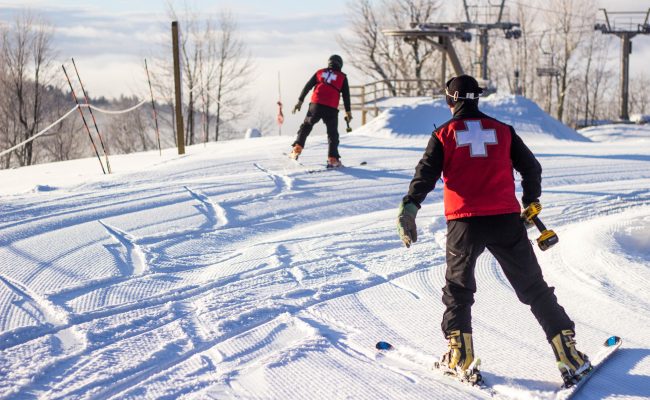
If you’ve ever seen a red jacket ski toward you and thought, “Uh oh,” you’re probably not alone.
It’s a common reaction. But it’s also one that Cranmore’s ski patrol is actively trying to change.
“We’re not ski cops,” said Alex Kemos, Cranmore’s new ski patrol director. “We just want to help people have a good experience.”
Kemos is new to the position but not new to the Valley. He started skiing here as a child and spent much of his life guiding, hiking, paddling and working in the outdoors before joining ski patrol full-time.
That background shows in how he talks about leadership.
“I believe in servant leadership,” Kemos explained. “Patrollers have A-type personalities who like to get things done. My job is to support them and make their jobs easier.”
Rather than trying to put his stamp on the patrol, Kemos is focused on recognizing the experience already there. Cranmore’s patrol includes longtime locals, former instructors, EMTs, firefighters and mountain ops veterans—many of whom have spent a decade or more on the hill.
“This is a really storied patrol,” Kemos said. “The people here are top-notch.”
Shared Responsibility on the Mountain
Ask patrol what gets people in trouble on the hill most often, and the answer isn’t complicated:
Rushing, overconfidence and forgetting that you’re sharing the mountain.
That’s why the Skier Responsibility Code is so important. It’s not about restrictions. It’s a friendly reminder that a great day on the mountain depends on everyone doing their part. Ski within yourself, observe signs and stay aware of what’s happening around you.
“Peripheral awareness is huge,” Kemos said. “You might have someone straight-lining the sides and someone else crossing the trail very cautiously. Knowing what’s around you keeps everyone safer.”
One of the most common misunderstandings patrol deals with is trail closures.
“We’re not trying to keep secret stashes for ourselves,” explained Tom Harmon, a patroller at Cranmore for over 10 years. “If it’s closed, it’s because it's not safe for you and it’s not safe for us if something goes wrong and we need to come get you.”
Patrol knows these conversations can feel uncomfortable, which is why one of their goals this season is visibility without intimidation. Being present in slow zones. Answering questions. Stepping in when needed, but not hovering.
Check the Conditions
Conditions in the White Mountains can change quickly, and patrol encourages guests to adapt their approach accordingly.
That starts with the first run. Ease into the day. Take a warm-up lap. Pay attention to how the snow feels and how your skis perform before pushing limits.
The same advice applies in terrain parks, where awareness and ability level matter even more. Reading posted rules, checking landings, and easing into features can make the difference between a great session and a season-ending injury.
And then there’s the classic mistake patrol sees all the time.
“That ‘one more’ run,” Kemos said. “A lot happens on that ‘one more’ run.”
Skiing and riding are better when you leave some energy in the tank. Fatigue can affect reaction time, and combined with tired legs, small mistakes quickly become bigger ones. As the patrol puts it: the season is a marathon, not a sprint.
The goal is simple.
At the end of the day, Cranmore’s ski patrol is trying to support the mountain experience in any way possible—helping guests stay safe, confident and ready to return the next day and the rest of the season.
“We just want people to go home safe,” Kemos said. “And we want them to come back tomorrow and the next day.”
So if you see a red jacket on the mountain, say hello, ask a question, take the advice. They’re here to help make sure your best days on the mountain aren’t just today, but all season long.
